What Are Peptides? Research Guide to Cellular Signaling Molecules (2026)
For Research Use Only. Educational content for laboratory research literacy. Products are not intended for human consumption.
Quick Answer
What Are Peptides?
Peptides are short chains of amino acids that act as cellular messengers. This guide explains structure, signaling roles, common categories, and how to read evidence without relying on hype—framed for research and educational literacy.
What Are Peptides? Structure, Signaling & Evidence Literacy
Scientific Snapshot
Topic
What Are Peptides?
Classification
Short amino-acid signaling molecules
Scientific Focus
Structure, cellular communication, categories
Research Areas
Skin, recovery, and bioactive peptide education
Analytical Evaluation
Documentation and evidence-reading habits
Quick Facts
Core Definition
Short amino acid chains
Primary Idea
Cellular signaling / messenger roles
Related Topics
Proteins vs peptides, topical peptides, research peptides
Methods
Literature literacy and COA-aware sourcing
Boundary
Educational research framing only
Key Takeaways
Asking what are peptides starts with structure: short amino-acid chains with signaling roles.
What are peptides? They are short amino acid chains that act as cellular messengers. This guide explains structure, signaling roles, common categories, and how to read evidence without relying on hype.
As a board-certified integrative and functional medicine physician with over 18 years of clinical experience, I’ve watched peptides move from niche research compounds to widely discussed research compounds. research audiences come to my clinic asking the same question you’re probably here for: “What are peptides, and should I be using them?”
The answer is nuanced, evidence-based, and incredibly exciting. Peptides are short chains of amino acids that act as precise cellular messengers—essentially biological systems under study’s internal texting system. Unlike bulky proteins that supply raw building materials, peptides deliver targeted instructions that tell your cells exactly what to do: build more collagen, reduce inflammation, accelerate tissue repair, or optimize hormone signaling.
In my practice, I’ve seen peptides transform outcomes for research audiences dealing with stubborn injuries, age-related decline, skin laxity, and even metabolic slowdown. They bridge the gap between nutrition and pharmaceuticals—potent enough to produce measurable results, yet generally well-tolerated when used appropriately.
This comprehensive guide explains everything you need to know: the science of peptide structure and function, the most clinically relevant types, research themes related to dermal matrix and muscle-recovery models, safety considerations, and how to build an effective literature-review protocol. Whether you’re a researcher building peptide literacy or reviewing signaling literature, you’ll leave with actionable insights grounded in both laboratory research and real-world research audiences results.
Research Note
How to Read Peptide Basics Responsibly
This article is for scientific education and research literacy. Interpret cosmetic or performance claims cautiously and prioritize primary literature.
Research Note
What Are Peptides? Outline and Value Framework
Standard “what are peptides” articles scratch the surface with basic definitions. This guide elevates the conversation by integrating clinical protocols I actually prescribe, comparative data on peptide vs. protein efficacy, safety monitoring guidelines, and synergistic stacks that amplify results. You’ll gain E-E-A-T-backed strategies that go far beyond marketing hype—practical tools for measurable improvements in recovery, appearance, and performance.
What Are Peptides? The Science of Cellular Communicators
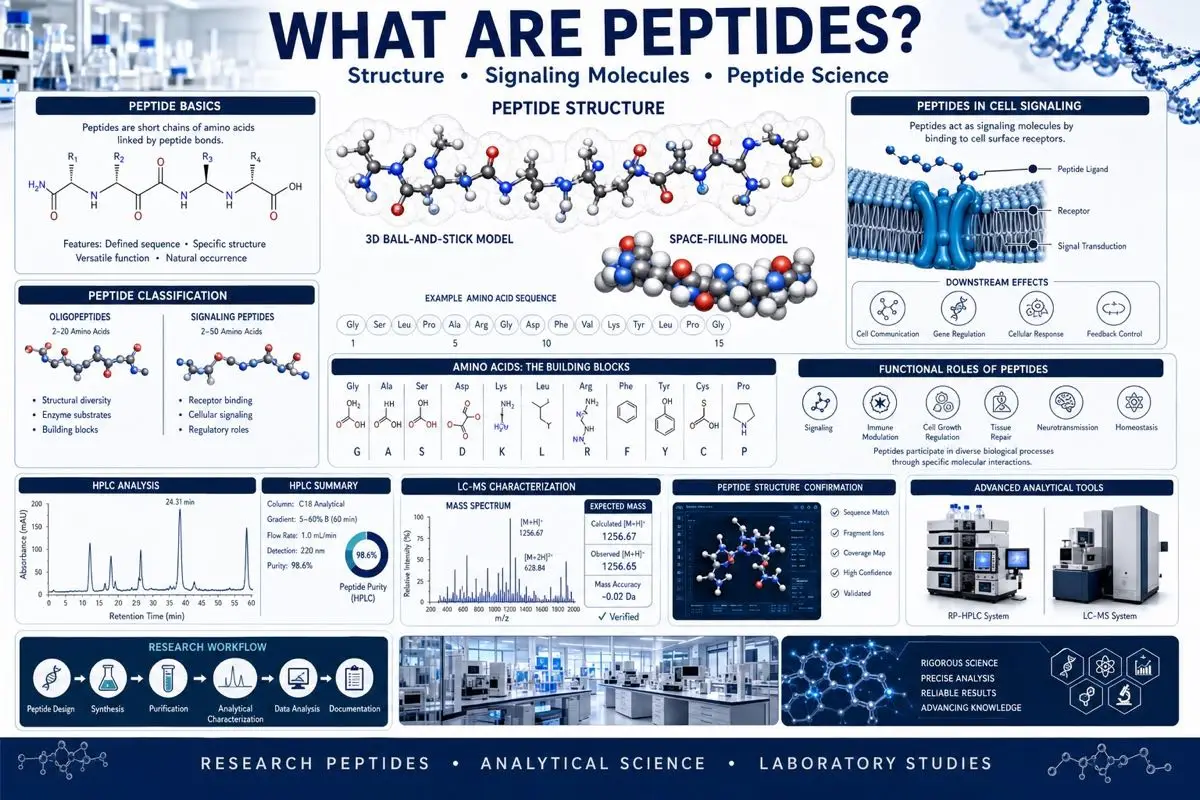
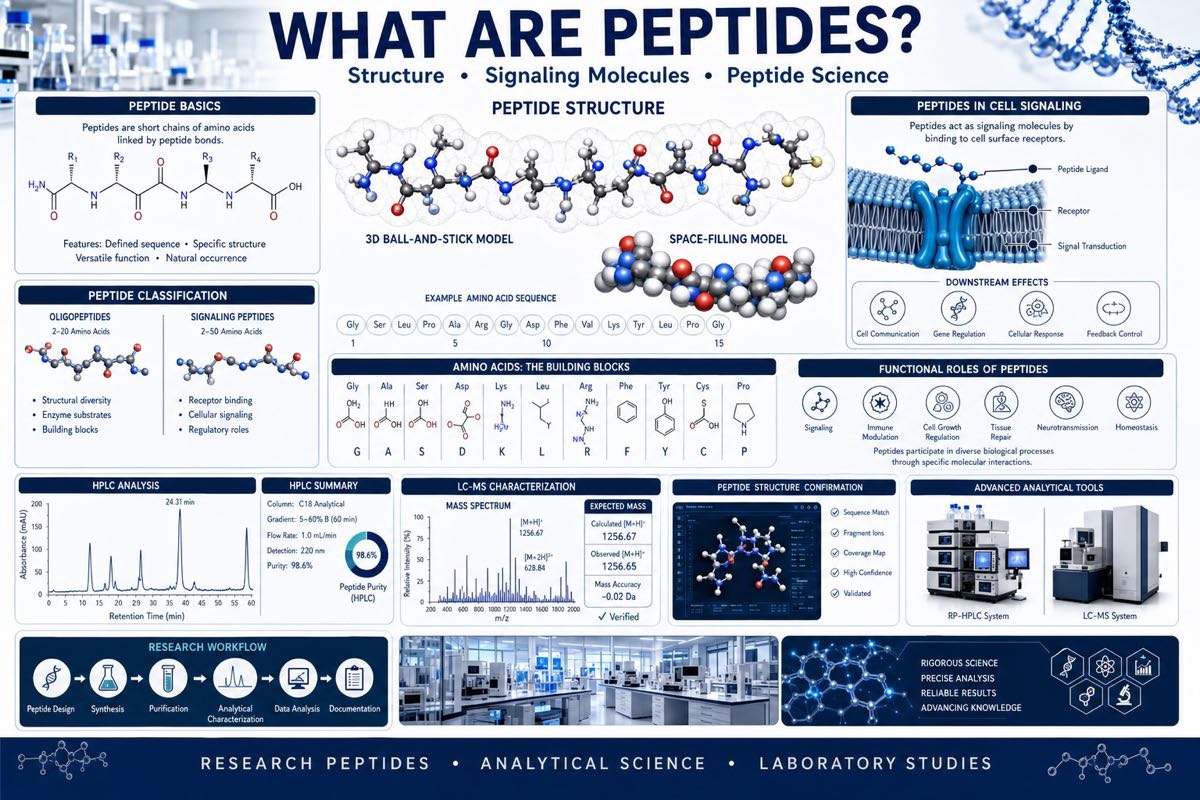
Laboratory research visual supporting signaling and documentation literacy.
Peptides are short chains of 2–50 amino acids linked by peptide bonds. When chains exceed ~50 amino acids, they typically fold into full proteins. This size distinction is critical: smaller peptides remain highly bioavailable, mobile, and capable of crossing biological barriers that larger molecules cannot.
Think of amino acids as individual letters. A dipeptide is a two-letter word. A polypeptide is a complete sentence. A protein is an entire instruction manual. Because peptides are concise, they function as highly specific signals rather than bulk material. They bind to cell-surface receptors like keys in locks, triggering intracellular cascades that regulate gene expression, enzyme activity, and tissue remodeling.
In research discussion, I explain this to research audiences using the construction-site analogy: proteins are the bricks and mortar; peptides are the foremen with blueprints directing where and how fast to build.
Aspect
Peptides
Proteins
Length
2–50 amino acids
50+ amino acids
Bioavailability
High (rapid absorption)
Lower (requires extensive digestion)
Mechanism
Signaling & regulation
Structural & enzymatic
Skin Penetration
Excellent
Poor
Targeted Action
Highly specific
General nutrient supply
Clinical Use
Therapeutic & cosmetic
Nutritional supplementation
This size advantage explains why topical collagen creams often disappoint while peptide serums deliver visible firmness—small molecules reach fibroblasts deep in the dermis and instruct them to produce more extracellular matrix.
What Are Peptides Doing at the Cellular Level?
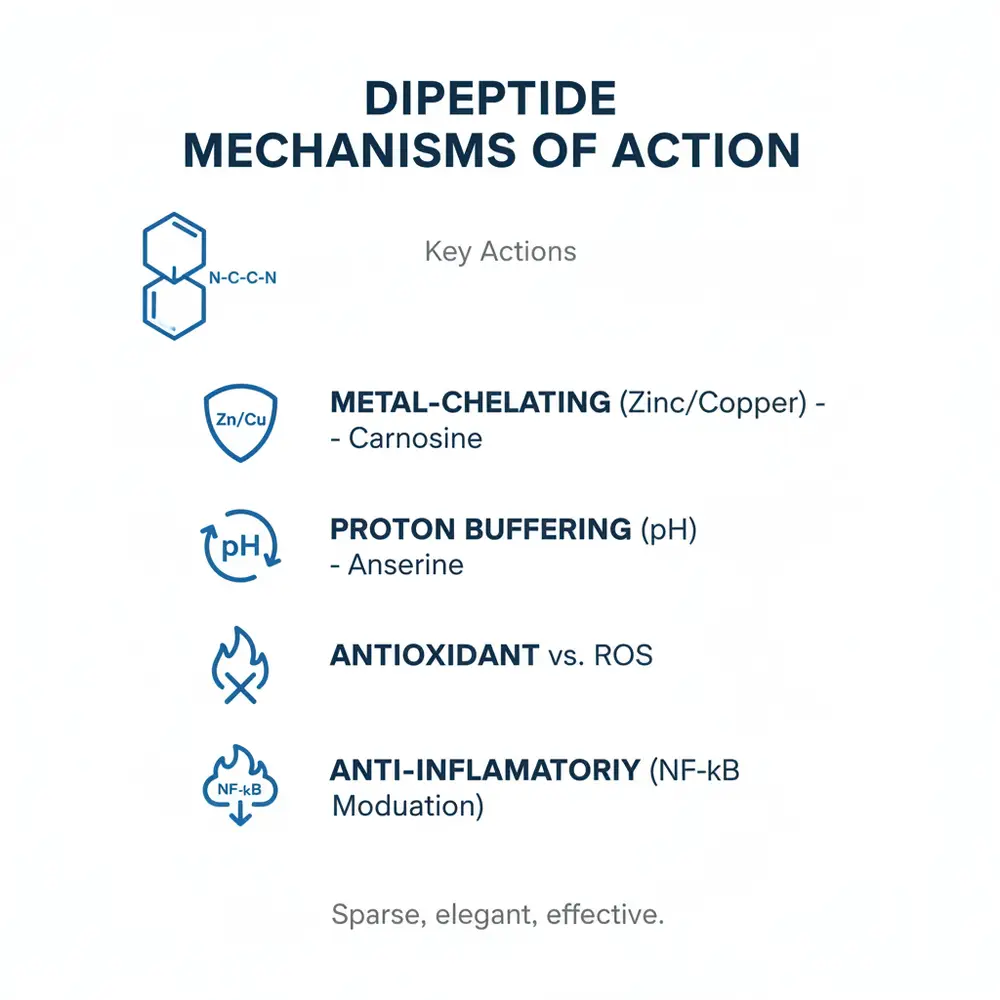
Related regenerative peptide research graphic for comparative literature context.
Peptides bind specific G-protein-coupled receptors or enzyme-linked receptors on cell surfaces. This binding activates second-messenger systems (cAMP, IP3, calcium fluxes) that ultimately alter gene transcription and protein synthesis.
For example, signal peptides upregulate TGF-β and other growth factors that stimulate collagen I and III production. Carrier peptides like GHK-Cu transport copper ions into cells, acting as cofactors for lysyl oxidase—the enzyme that cross-links collagen fibers to increase tensile strength.
In my research audiences using targeted peptide protocols, I routinely observe improvements in skin elasticity (measured by cutometer), faster post-workout recovery (reduced DOMS via CK levels), and enhanced wound healing. These are not placebo effects; they reflect restored intercellular communication that declines with age.
Five Peptide Classes Commonly Discussed in Research Literature
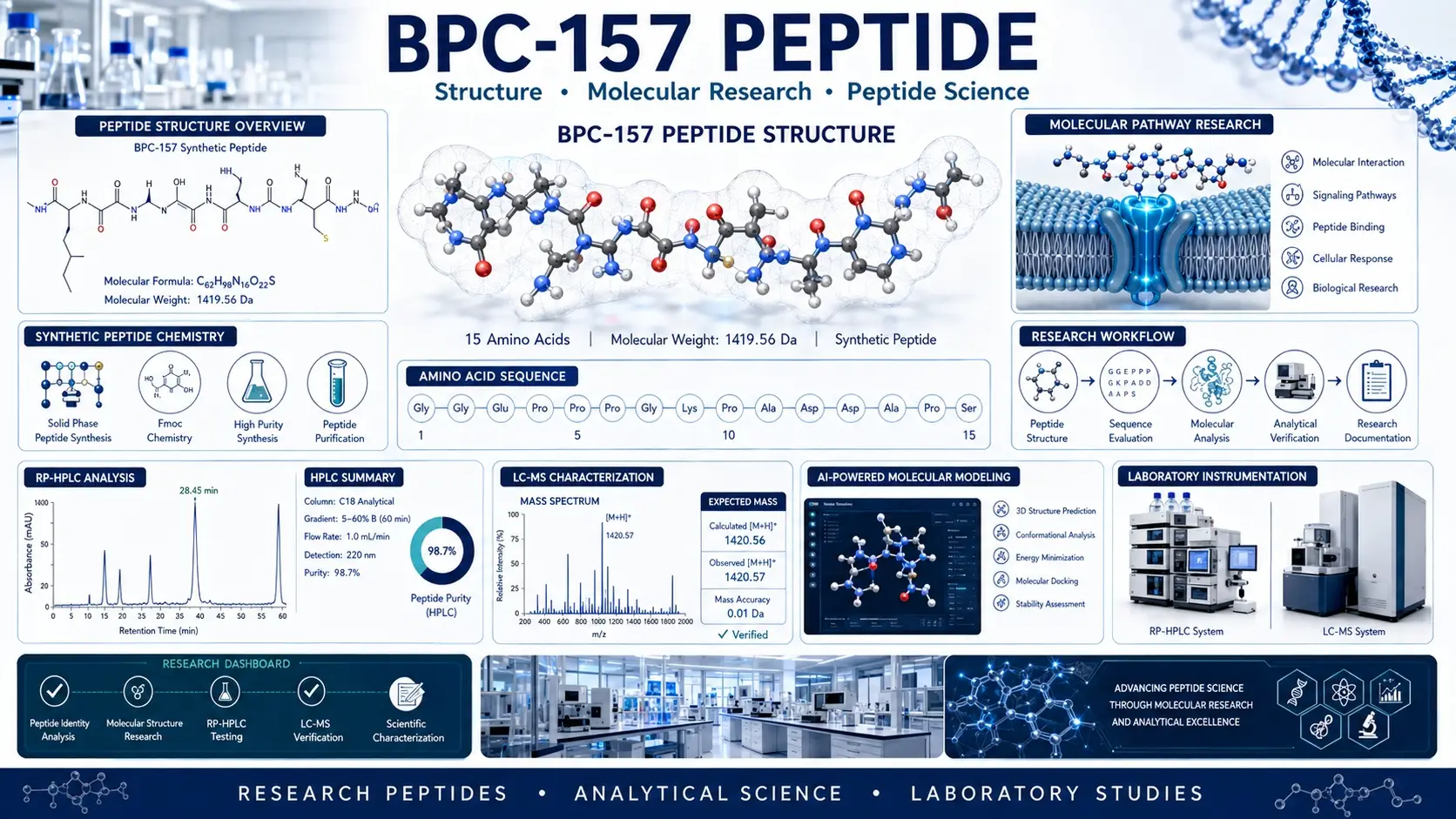
Analytical research graphic reinforcing evidence-boundary discussion.
Signal Peptides
Command fibroblasts to increase collagen, elastin, and glycosaminoglycan production. Matrixyl 3000 (palmitoyl tripeptide-1 + palmitoyl tetrapeptide-7) is a flagship example with robust clinical data.
Carrier Peptides
Deliver trace minerals (especially copper) to sites of repair. GHK-Cu remains one of the most studied and clinically effective.
Enzyme-Inhibitor Peptides
Downregulate matrix metalloproteinases (MMPs) that break down existing collagen. This preserves what you already have while new matrix forms.
Neurotransmitter-Inhibitor (Neuropeptides)
Argireline (acetyl hexapeptide-8) and related compounds reduce facial muscle contractions, softening dynamic wrinkles without needles.
Antimicrobial & Tissue-Repair Research Peptides
BPC-157, TB-500, and LL-37 support tissue repair, angiogenesis, and modulation of inflammatory pathways. These are game-changers for musculoskeletal injuries in my regenerative medicine clinic.
Topical Peptide Research Themes: Elasticity and Repair Models
Aging skin loses both its capacity for collagen production and its signaling efficiency. Topical peptides bypass this by directly stimulating dermal fibroblasts. Multiple randomized trials show statistically significant improvements in wrinkle depth, skin roughness, and elasticity after 4–12 weeks of consistent use.
I recommend layering a copper-peptide serum under a signal-peptide moisturizer nightly. research audiences consistently report firmer, more hydrated skin with reduced redness—effects I can corroborate with before-and-after high-resolution imaging.
Peptides in Muscle-Recovery and Injury-Repair Research Models
Beyond aesthetics, systemic and localized peptides shine in sports medicine and longevity.
BPC-157 (Body Protection Compound) is studied for tendon-to-bone repair markers, gut-mucosa models, and inflammation signaling. I’ve used it successfully in research audiences with chronic tendinopathies and post-surgical recovery.
TB-500 (Thymosin Beta-4 fragment) promotes actin sequestration, cell migration, and angiogenesis—ideal for soft-tissue injuries.
CJC-1295 + Ipamorelin, growth hormone secretagogues, improve sleep, recovery, and body composition when dosed properly under medical supervision.
Always combine with resistance training, adequate protein (1.6–2.2 g/kg), and sleep optimization for synergistic results.
What Are Peptides from Natural Bioactive Sources?
Your diet already supplies bioactive peptides. Fermented dairy, eggs, soy, and bone broth release signaling fragments during digestion. Collagen peptides (hydrolyzed) are studied for absorption characteristics and joint/skin matrix research endpoints.
However, therapeutic applications usually require concentrated, sequence-specific synthetic or recombinant peptides for predictable dosing and potency.
Is peptide research Discussed Safely in Education? Research Monitoring Themes
When sourced from reputable compounding pharmacies and used under physician guidance, peptides boast excellent safety profiles. Common side effects are mild: transient injection-site reactions, water retention with GH secretagogues, or mild fatigue.
Red flags to avoid:
“Research chemical” vendors without USP-grade certification
Products labeled “for research only.”
Lack of third-party COAs
Unrealistic cure-all claims
I require baseline labs (CBC, CMP, IGF-1, and inflammatory markers) and periodic monitoring. Careful evidence selection and individualized study design are essential for high-stakes research topics.
A 3-Step Evidence-Review Plan for Peptide Literature
Step 1: Foundation
Optimize nutrition with 30–40 g collagen peptides daily + resistance training.
Step 3: Advanced (with MD supervision)
Review BPC-157 or GH-secretagogue literature only within defined experimental goals and institutional review requirements.
What Are Peptides? Key Takeaways
Peptides are among the most elegant tools in modern regenerative and functional medicine. By participating in cellular communication pathways, they are studied for roles in repair signaling and tissue-maintenance models. In my practice, they consistently deliver measurable improvements in skin quality, injury resolution, and overall vitality when integrated thoughtfully into personalized protocols.
The science is robust, the mechanisms well-understood, and the clinical results reproducible. As with any bioactive intervention, success depends on quality sourcing, appropriate use, and medical oversight.
Last updated: April 27, 2026
Start where you are. Whether that’s adding a scoop of collagen peptides to your morning smoothie or consulting a functional medicine practitioner about advanced therapies, your cells are ready to receive better instructions.
FAQ
Peptides are short chains of 2–50 amino acids that function as highly specific signaling molecules. They bind cell receptors and trigger targeted biological responses such as collagen production, tissue repair, and hormone regulation—distinct from larger structural proteins.
Peptides are short and act as messengers; proteins are long chains that primarily provide structure or enzymatic function. The size difference gives peptides superior bioavailability and targeted action.
Yes. Hydrolyzed collagen peptides are well-absorbed, stimulate fibroblast activity, improve skin elasticity and hydration, and reduce joint pain according to multiple meta-analyses.
They mimic natural breakdown fragments of collagen, tricking fibroblasts into ramping up production of new extracellular matrix proteins. Clinical studies show visible wrinkle reduction within weeks.
When obtained from reputable compounding pharmacies and used under medical supervision, BPC-157 demonstrates strong preclinical and anecdotal evidence for tendon, ligament, and gut healing. Proper monitoring is essential.
Yes. Many research audiences combine topical or injectable peptides with neuromodulators for synergistic rejuvenation—peptides improve skin quality while injectables address dynamic lines.
Oral collagen/BPC-157 for general support; subcutaneous GH secretagogues (CJC-1295/Ipamorelin) for advanced recovery. Always pair with training and nutrition.
Most are mild and transient (administration site in research models reactions, water retention). Serious adverse events are rare with pharmaceutical-grade products and proper dosing.
Yes—especially for injectable or advanced peptides. Comprehensive evaluation ensures safety and optimal personalization.
How to Read Evidence When Asking What Are Peptides
Readers who ask what are peptides should separate mechanism papers from clinical outcomes. Mechanism work explains receptor pathways. Outcome work tests measurable endpoints in people. Keeping those piles separate prevents overconfidence from early-stage research.
Build a short source card every time you answer what are peptides for colleagues. Include study design, species, and conflicts of interest. Source cards make later updates faster when new papers appear.
When evaluating vendor education that asks what are peptides in marketing language, demand citations you can open. If a claim has no PubMed trail, treat it as storytelling, not evidence.
Update your what are peptides reading list quarterly. Fields like regenerative signaling and skin-repair research move quickly, and older summaries age out.
Research Note
Documentation Habits That Support Peptide Literacy
Pair educational pages with certificate-of-analysis examples so readers see how identity and purity are reported. Documentation literacy matters whenever inventory enters a laboratory workflow.
Create an internal glossary that defines dipeptides, oligopeptides, and polypeptides in plain language. Shared definitions reduce confusion during onboarding and cross-team reviews.
Keep a changelog for educational pages. Note which references were added or removed and why. Changelogs help auditors understand how educational wording evolved.
Use dual review for drafts: one person checks science references; another checks disclaimer placement and regulatory tone. Dual review catches absolute claims before publication.
Research Note
Teaching Scenarios for New Staff Exploring Peptide Basics
Give trainees a mock packet and ask them to grade whether documents support an educational citation. Debrief missed steps into a living FAQ for the next cohort.
Ask trainees to rewrite a hyperbolic social post into measured educational language. The rewrite exercise trains judgment better than memorizing definitions alone.
Rotate reviewers so familiar vendors do not always get automatic passes. Fresh eyes catch expired certificates, vague methods, and missing lot identifiers.
Map each educational topic to on-site COA explainers and warehouse-quality pages so visitors can verify details without leaving the site.
Research Note
Bibliography Cadence for Cellular Signaling Topics
Maintain a spreadsheet of DOI values, PubMed IDs, access dates, and a one-line evidence grade. Sorting by study design helps trainees learn taxonomy quickly.
Assign one owner each quarter to summarize FDA bulk-substance or compounding updates that affect educational framing. Post the memo beside SOPs, not only in email.
Prefer primary literature over secondary blogs when summarizing mechanisms. If only secondary coverage exists, say so explicitly. That honesty clarifies scientific maturity.
Discourage absolute words such as “guaranteed,” “overstated,” or “proven cure” in educational copy. Measured phrasing improves both compliance posture and reader trust.
Research Note
Closing Notes on Evidence Boundaries
People searching what are peptides deserve clear boundaries: signaling biology is real, popular protocols vary, and human evidence is uneven by compound. Education should teach reading skills, not promises.
Retain dated drafts when pages change. Version history shows which educational materials were available at a given time. Silence during regulatory flux should be replaced with a short “under review” note.
Continue linking explainers to COA education and PubMed searches so readers can verify claims independently. Independent verification is the durable habit behind responsible scientific literacy.
Research Note
Operational Cadence for Readers Asking What Are Peptides
Teams teaching staff what are peptides should schedule quarterly reading updates. Fixed cadence prevents outdated mechanism summaries from lingering in onboarding packs.
When answering what are peptides in a clinic education deck, link each slide to a primary paper or a COA explainer. Linked slides reduce unsupported verbal claims during live training.
Store dated notes each time you revise how you explain what are peptides. Date stamps help later reviewers see which regulatory context applied at the time of writing.
If marketing copy overstates certainty about what are peptides can do, pause publication and rewrite with evidence grades. Pause-and-rewrite beats publishing corrections later.
Research Note
Source Hygiene Beyond the Basics
Score citations on design quality, sample transparency, conflicts, replication, and year. Average the rubric before elevating any source into a headline callout.
Prefer primary literature for mechanism claims. Secondary blogs can appear in footnotes with explicit labeling. Clear labeling teaches trainees how mature a claim really is.
Screenshot-based “proof” expires. Link to live agency pages when discussing compounding or bulk-substance lists, then re-check links each quarter.
Reuse consistent vocabulary across warehouse, COA, and education pages so visitors do not think two pages contradict each other.
Research Note
Training Drills That Stick
Have trainees rewrite a hyperbolic social post into measured educational language. The rewrite drill builds judgment faster than definition quizzes alone.
Run a mock vendor-packet review where trainees decide whether documents support an educational citation. Capture missed steps into a living FAQ.
Rotate reviewers so familiar vendors do not always soft-pass. Fresh eyes catch expired certificates and vague method language.
Map each topic to on-site COA and quality pages so readers can verify details without leaving the domain.
Research Note
Final Notes on What Are Peptides for Evidence Readers
People searching what are peptides need boundary language: signaling biology is real, popular stacks vary, and human evidence differs by compound. Teaching evidence-reading is the productive outcome.
Keep answering what are peptides with citations nearby. Citation adjacency trains skepticism without cynicism, which is the tone teams want for YMYL-adjacent education.
When committees ask what are peptides in policy meetings, bring a one-page brief that separates approved indications from compounding research chemicals. One-page briefs prevent digressions into unverified forums.
Archive superseded explainers so you can show which version of what are peptides content existed on a given date. Archives protect institutions during retrospective questions.
Continue pairing what are peptides explainers with COA literacy and PubMed links. Independent verification remains the best habit for scientific literacy programs.
Explore the Research Catalog
Review research-use peptide materials with documentation-first sourcing workflows.
Important: The products on this website are for legitimate research use only. They are not intended for human consumption, and are not intended to diagnose, treat, cure, or prevent any disease.
By proceeding, you confirm that you are 21 years of age or older, understand these terms, and have a bona fide research purpose for purchasing these products.
Note: Compounds are sold individually and do not include supplies (e.g., bacteriostatic water or syringes). Most are sold in powder form and require reconstitution with a suitable diluent prior to research.