
For Research Use Only. Educational content for laboratory research literacy. Not medical advice; not for human use.
What Should a Lab Look for in a Peptide Company?
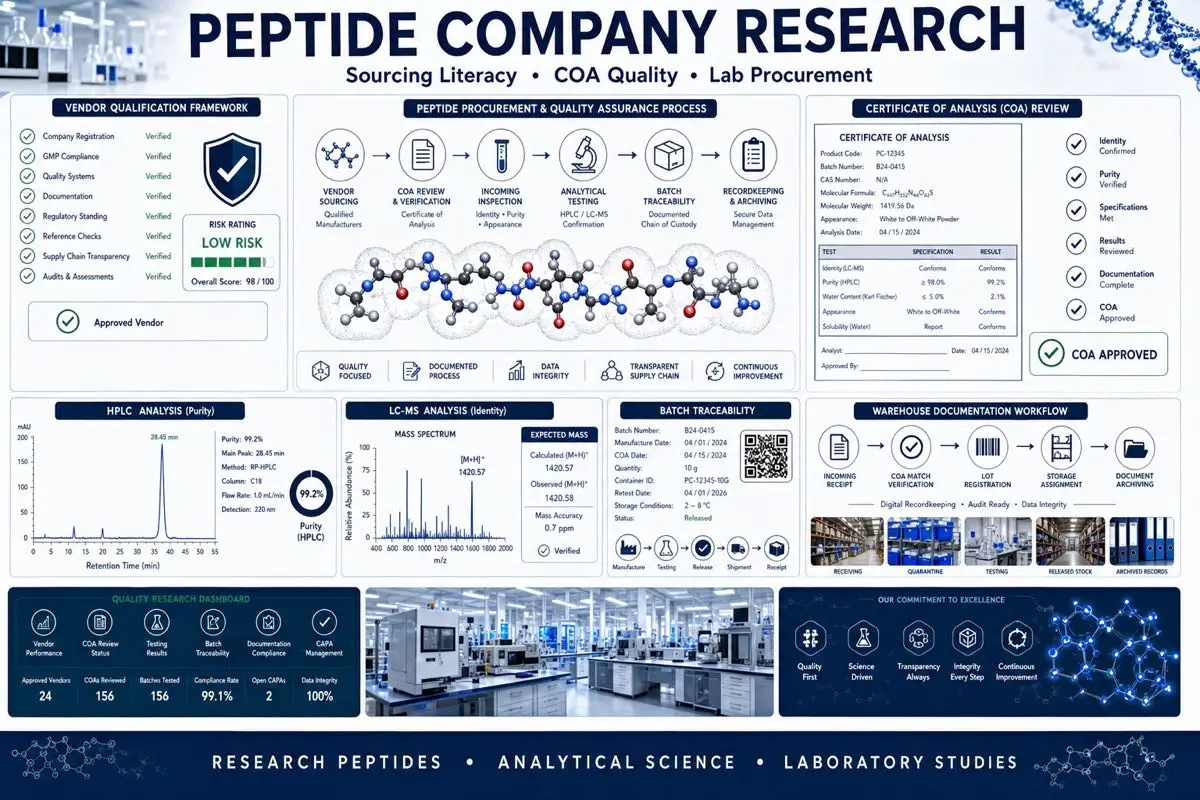
When your lab is choosing a peptide company, the real question is not whether peptides are available. It is whether the material arrives with the testing, documentation, and sourcing clarity your team needs to move forward with confidence.
Countrywide Peptides is an American-owned supplier of research-grade peptides serving qualified researchers, laboratories, and institutions across the United States. We provide USA-made, 99%+ pure compounds, third-party HPLC/MS verification, downloadable batch-specific Certificates of Analysis, rapid nationwide shipping, and research-focused support for laboratory use only.
Peptide Company for Research Labs: Documentation, Testing & Sourcing Clarity
| Supplier | Countrywide Peptides |
| Focus | Research-use peptide company for U.S. laboratories |
| Purity positioning | 99%+ pure research compounds |
| Verification | Third-party HPLC/MS with batch-specific COAs |
| Audience | Qualified researchers, labs, and institutions |
| Boundary | Laboratory research purposes only |
| Catalog focus | Research peptides, peptide blends, lab supplies |
| Documentation | Downloadable batch COAs and chain-of-custody notes |
| Logistics | Fast U.S. shipping; free shipping on orders over $200 |
| Support model | Research-focused procurement support |
| Fit signal | In vitro / pre-clinical research buyers needing traceable lots |
Key Takeaways
- A peptide company for research labs should lead with lot documentation, not catalog volume alone.
- Third-party HPLC/MS verification and batch-specific COAs reduce post-purchase paperwork delays.
- USA-made chain-of-custody language helps labs maintain cleaner sourcing records.
- Research-use-only positioning is a fit filter, not fine print.
- Fast shipping and bulk pricing matter most when documentation is already clear.
Table of Contents
- Introduction
- Research-Use Boundaries
- Documented Purity for U.S. Labs
- COAs, HPLC/MS, and Chain of Custody
- Shipping, Ordering, and Bulk Planning
- Who This Peptide Company Fits
- How Labs Evaluate a Peptide Company
- Operations Notes for Multi-Site Teams
- Procurement Playbook
- Documentation Depth
- Frequently Asked Questions
- Next Step for Research Procurement
Introduction
Procurement conversations often start with price and availability. In practice, a research team evaluating a peptide company needs a clearer checklist: identity confirmation, purity documentation, lot traceability, shipping reliability, and an unambiguous research-use scope.
Countrywide Peptides is positioned as a peptide company for laboratories that treat documentation as part of experimental readiness.
This page explains how that model works, what documentation buyers can expect, and how to decide whether Countrywide Peptides is the right peptide company fit for a laboratory program.
Use this guide as a shared reference for purchasing, receiving, and assay owners. Aligning those roles early prevents vials from entering inventory before certificates are archived and lot numbers are confirmed.
Research Note
Research-Use Boundaries
Documented identity and purity matter in this category. FDA guidance on research-use-only products distinguishes RUO materials from products intended to diagnose, treat, or cure disease, and peptide quality literature commonly relies on analytical methods such as HPLC and mass spectrometry to confirm identity and assess impurities. Countrywide Peptides aligns with that expectation by making testing and research-use-only positioning central to the offer rather than treating them as fine print.
For analytical context, see peer-reviewed discussions of peptide characterization and purity assessment on PubMed and related method literature on peptide analysis workflows. These references help laboratory buyers interpret COA language without changing the research-use scope of sourced materials.
If your project requires materials labeled for diagnostic, therapeutic, or other non-research applications, Countrywide Peptides is not positioned for that need. Our products are intended strictly for laboratory research purposes only, which gives qualified research buyers a clearer supplier fit from the start.
Countrywide Peptides Supplies Research Peptides for U.S. Laboratories That Need Documented Purity
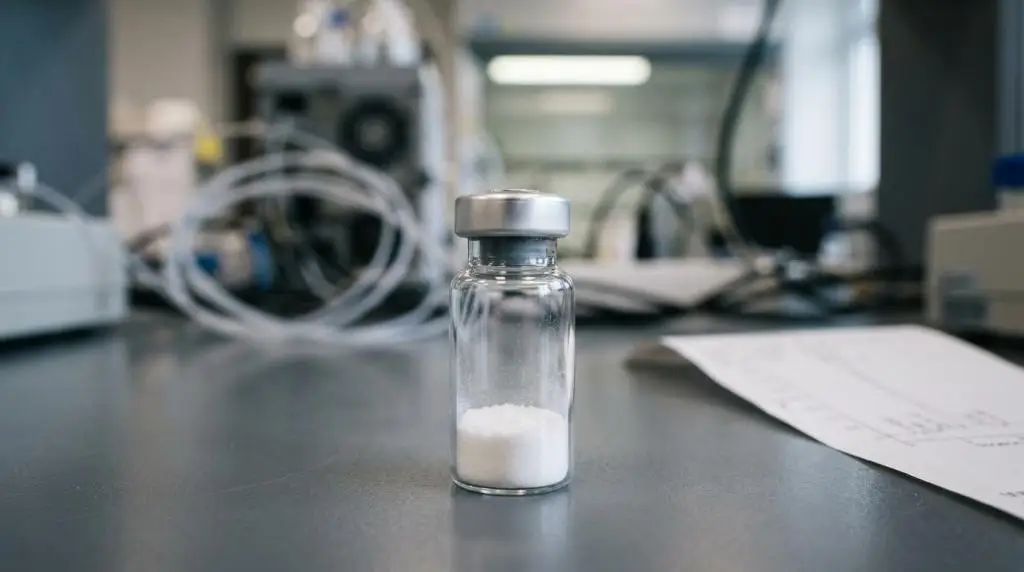
Countrywide Peptides is built for research teams that cannot afford vague specifications or undocumented lots. We supply lyophilized research peptides, peptide blends, and bacteriostatic water for laboratories working in biotech, regenerative medicine, and health sciences, with a focus on in vitro and pre-clinical applications.
Countrywide Peptides provides 99%+ pure research peptides with third-party HPLC/MS verification and batch-specific COAs.
That means you are sourcing from a peptide company positioned specifically around research workflows and documentation.
- Research peptides
- Peptide blends
- Lab supplies including bacteriostatic water
Batch-Specific COAs, HPLC/MS Testing, and Chain-of-Custody Documentation Reduce Sourcing Risk

Countrywide Peptides makes quality documentation visible before it becomes a problem for your project. Every lot is tested by third-party laboratories using HPLC and mass spectrometry, and each batch has a downloadable Certificate of Analysis.
Countrywide Peptides provides batch-specific COAs through independent third-party testing performed by Freedom Diagnostics Testing.
Countrywide Peptides also emphasizes zero fillers or additives and USA-made sourcing with full chain-of-custody documentation.
A strong peptide company intake habit is simple: match vial labels to COA lot numbers, confirm method language is readable, and archive files before materials enter shared inventory.
Fast Peptide Shipping, Secure Ordering, and Bulk Pricing for Ongoing U.S. Research Projects
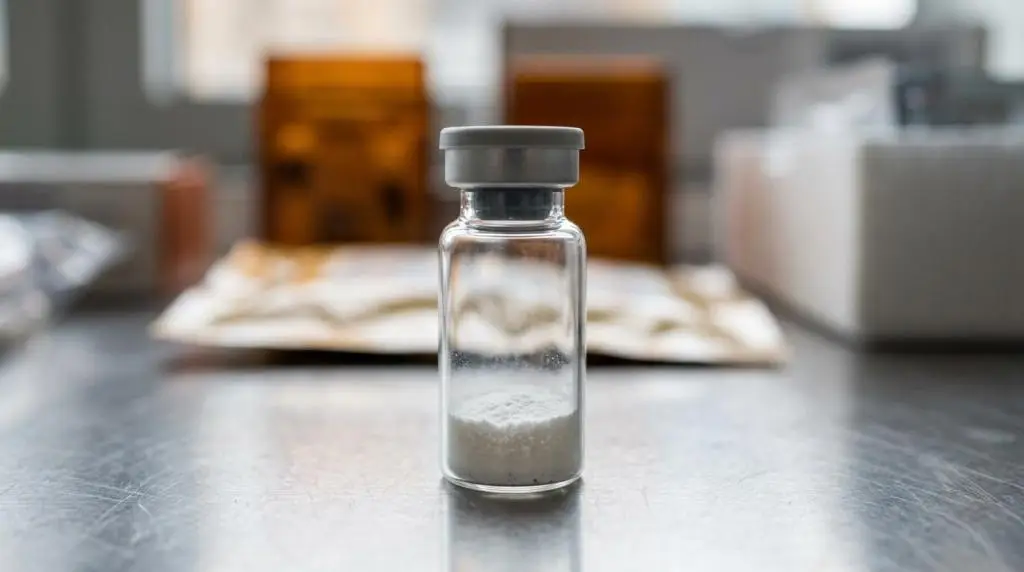
Countrywide Peptides supports U.S. labs with fast nationwide shipping, free shipping on orders over $200, secure encrypted ordering, and bulk pricing options.
Countrywide Peptides pairs logistics with research-focused support. Logistics matter most after a peptide company has already made documentation easy to retrieve.
Plan bulk orders against assay calendars so quarantine review does not collide with method start dates. Free shipping thresholds and bulk pricing help only when documentation retrieval remains fast.
A Peptide Company for Researchers Who Need Research-Use-Only Materials, Not Marketing Hype
Countrywide Peptides is the right fit when your team needs a supplier that stays inside laboratory research boundaries and backs each lot with traceable documentation.
- You need lyophilized peptides for in vitro or pre-clinical research
- You want batch-specific COAs available as part of the buying decision
- You require third-party HPLC/MS verification
- You prefer USA-made materials with chain-of-custody documentation
- You expect fast U.S. shipping and bulk pricing
If your project requires materials labeled for diagnostic, therapeutic, or other non-research applications, Countrywide Peptides is not positioned for that need. Our products are intended strictly for laboratory research purposes only, which gives qualified research buyers a clearer supplier fit from the start.
How Labs Should Evaluate a Peptide Company Before Ordering
A practical peptide company evaluation is a documentation and operations review.
Ask whether COAs are batch-specific, whether third-party methods are named clearly, and whether research-use scope is stated without ambiguity.
Write acceptance criteria before the first PO, including required document fields, lot-match rules, and archive locations.
Compare at least two suppliers using the same scorecard so catalog marketing does not outweigh incomplete method fields. Prefer suppliers that make certificates downloadable without support tickets.
Operations Notes for Multi-Site Research Teams
Multi-site programs need shared naming conventions and one supplier scorecard across locations so documentation habits stay consistent.
Receiving and quarantine
Create a written receiving protocol that requires dual acknowledgment for every inbound carton, temperature-indicator review when cold-chain notes appear on the packing slip, and an unopened hold quarantine until lot numbers match archived certificates. Train backup purchasers so coverage does not collapse when the primary buyer is offline. Keep carrier exception notes in the same folder as packing slips so dispute timelines stay short.
Documentation archives
Standardize COA filename conventions with lot number, catalog SKU, and receive date. Store downloadable certificate copies on shared drives with retention schedules that match institutional audit expectations. Run quarterly mock audits that pull random lots and verify that method fields, third-party lab names, and purity figures remain readable without opening sealed vials.
Multi-site scorecards
Use one shared glossary across sites so purity claims, research-use language, and preferred SKUs mean the same thing in every purchasing ticket. Score suppliers on documentation completeness, lead-time reliability, and exception handling rather than catalog size alone. Escalate incomplete method fields before materials enter shared freezers.
Budget and assay calendars
Separate discovery budgets from validation budgets so rush orders do not silently consume assay calendars. Align preferred SKUs with upcoming method runs and freezer map labels so inventory reconciliation at month end is faster. Capture approved substitutions in writing before technicians open alternative lots.
Support and communication
Tag support tickets by documentation request type so response patterns are measurable. Archive order email threads with PO numbers for chain-of-custody reconstruction. Schedule stakeholder walkthroughs of sample certificates during onboarding so new researchers understand what pass-or-hold receiving status means.
Near-miss and training loops
Log near-misses when labels and certificates do not match, then convert those events into checklist drills. Refresh research-use boundary training whenever new technicians join the receiving desk. Keep end-of-month inventory reconciliation tied to lot-level archive checks rather than vial counts alone.
Cold-chain and logistics notes
Record cold-chain purchase notes even when ambient shipping is used, because assay teams often ask later whether temperature exposure was documented. Track document lead times separately from package transit times. Maintain repeat-order templates that already list required certificate fields so procurement does not reinvent the request.
Analytical literacy habits
Encourage buyers to read HPLC and mass spectrometry language on certificates before approving payment. Confirm that identity and impurity sections are present, then map those fields into internal acceptance criteria. When method-field completeness fails, place the lot on hold and notify the assay owner immediately.
Procurement Playbook for Documented Research Materials
Treat supplier selection as an experimental readiness step. Before the first purchase order, write acceptance criteria that name required certificate fields, lot-match rules, archive locations, and who can release materials from quarantine. Share that document with principal investigators and receiving staff so the intake path is identical across shifts.
During the first three orders, measure how long it takes to retrieve batch files, how often labels match certificates on the first check, and how many tickets require clarification on research-use scope. Those early metrics predict whether ongoing projects will spend time on science or on paperwork.
For ongoing programs, schedule quarterly vendor reviews that inspect random lots, verify third-party lab names remain consistent, and confirm that bulk pricing still aligns with assay calendars. Keep backup media copies of certificates outside the primary shared drive so a single storage outage cannot erase chain-of-custody history.
When expanding to a second site, export the same scorecard, glossary, and intake checklist rather than reinventing local rules. Consistency across locations reduces false alarms during audits and keeps freezer map labels interpretable to visiting researchers.
Finally, connect purchasing handoff notes to assay calendars so materials arrive with enough buffer for quarantine review. Rush logistics cannot repair missing method language, and clear archives cannot compensate for vials opened before lot confirmation.
Why Documentation Depth Matters More Than Catalog Size
Large catalogs can look attractive until a laboratory needs a specific lot file within minutes of an audit request. Depth of documentation means downloadable batch certificates, readable HPLC and mass spectrometry sections, and chain-of-custody language that survives institutional review without side emails.
Research teams also benefit when logistics and documentation stay coupled. Fast shipping helps only after certificates are easy to retrieve and lot labels are consistent. Secure ordering helps only when the buyer can prove which lot entered which freezer shelf.
USA-made positioning and third-party verification reduce ambiguity for many U.S. laboratories, but the operational win is still the archive habit: match, store, reconcile, and escalate. That habit turns a supplier relationship into a controlled input for experimental design rather than a recurring source of delay.
Countrywide Peptides organizes its offer around those documentation habits while remaining explicit about laboratory research boundaries. Buyers who need diagnostic or therapeutic labeling should look elsewhere; buyers who need traceable research lots should evaluate documentation first and pricing second.
Additional Laboratory Controls That Keep Procurement Predictable
Document archive discipline, quarantine release authority, and assay-calendar buffers remain practical controls that keep laboratory procurement predictable across project phases and staff turnover.
Pair those controls with readable HPLC and mass spectrometry language so receiving staff can make pass-or-hold decisions without waiting for principal investigator review on every carton.
Shared freezer map labels, consistent SKU naming, and written approved-substitution rules reduce improvisation when rush assays collide with incomplete paperwork.
Institutional auditors typically ask for lot files, not catalog screenshots, so downloadable certificates and chain-of-custody notes should be treated as first-class experimental inputs.
When onboarding new buyers, walk through a sample certificate, a packing slip, and a failed lot-match example so the intake checklist is practiced before live materials arrive.
Separate document lead-time tracking from package transit tracking so teams can see whether delays come from logistics or from incomplete analytical files.
Retain order email archives with purchase-order numbers so chain-of-custody reconstruction does not depend on memory during unexpected inspections.
Quarterly vendor reviews should sample random lots, confirm third-party laboratory names, and verify that purity figures remain consistent with internal acceptance criteria.
Backup purchasers need the same glossary and scorecard as primary buyers so coverage gaps do not create undocumented shortcuts.
End-of-month inventory reconciliation works best when vial counts are tied to archived lot files rather than free-text notes in spreadsheets.
Document archive discipline, quarantine release authority, and assay-calendar buffers remain practical controls that keep laboratory procurement predictable across project phases and staff turnover. These habits also improve handoff quality between purchasing, receiving, and assay owners during staff turnover.
Pair those controls with readable HPLC and mass spectrometry language so receiving staff can make pass-or-hold decisions without waiting for principal investigator review on every carton. These habits also improve handoff quality between purchasing, receiving, and assay owners during staff turnover.
Shared freezer map labels, consistent SKU naming, and written approved-substitution rules reduce improvisation when rush assays collide with incomplete paperwork. These habits also improve handoff quality between purchasing, receiving, and assay owners during staff turnover.
Lab Checklist
Peptide Company Intake Checklist for Research Teams
When a peptide company order arrives, confirm lot numbers, seal integrity, and matching analytical files before materials enter shared inventory.
Keep purchasing notes aligned with experimental aims, archive certificates with consistent filenames, and escalate incomplete method fields before assay work begins.
Repeat the same checklist for every site so visiting auditors see one controlled process rather than local improvisation.
Frequently Asked Questions
What makes a peptide company suitable for research labs?
Look for batch-specific COAs, third-party methods, clear research-use scope, and reliable logistics.
Does Countrywide Peptides provide third-party testing?
Countrywide Peptides states that lots are tested by third-party laboratories using HPLC and mass spectrometry, with batch-specific COAs available for review.
Are products intended for human use?
Our products are intended strictly for laboratory research purposes only, which gives qualified research buyers a clearer supplier fit from the start.
Who is the best fit for this peptide company?
Qualified research buyers who need lyophilized peptides for in vitro or pre-clinical work and public COA access.
What should labs prepare before ordering?
Define the experimental job, required documentation fields, and an intake checklist before vials are opened.
How should multi-site labs keep intake consistent?
Share one glossary, scorecard, and quarantine checklist across locations, then review random lots quarterly.
Order Research Peptides from Countrywide Peptides with Clearer Documentation and Faster Turnaround
A peptide company should help your lab move faster with fewer sourcing questions. Countrywide Peptides combines 99%+ purity, third-party HPLC/MS testing, batch-specific COAs, USA-made chain-of-custody documentation, and nationwide shipping into a research-only supply model.
Review the Countrywide Peptides catalog to place your next laboratory order.
Next Step
Continue With COA and Research Resources
After evaluating this peptide company model, review COA practices used by laboratory buyers.
Explore the Research Catalog
Review research-use peptide materials with documentation-first sourcing workflows.